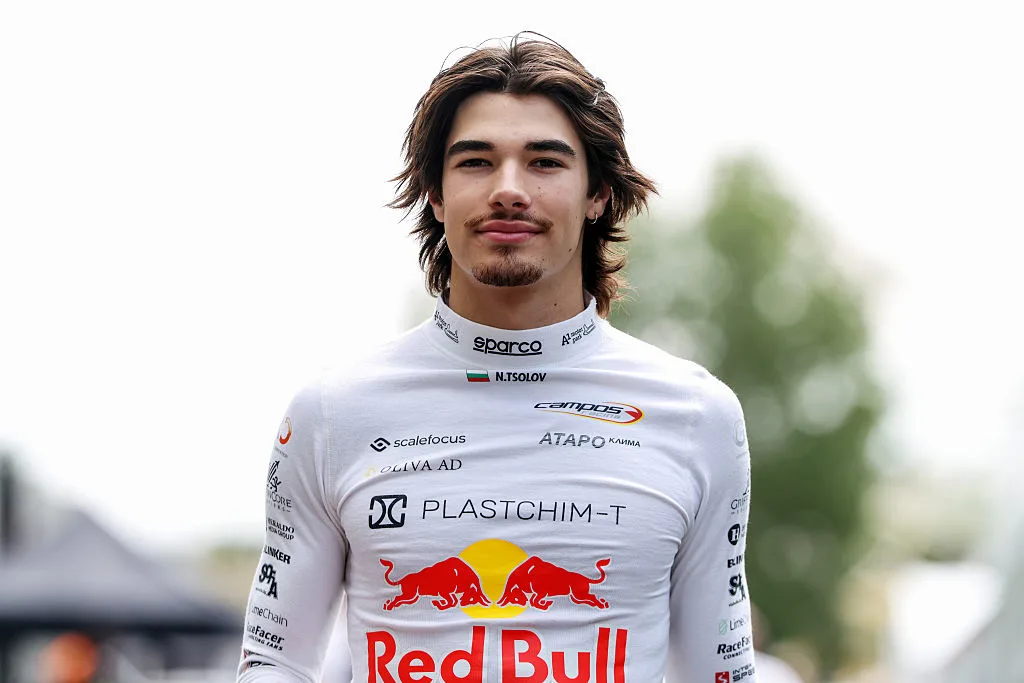
For decades, making it to Formula 1 was an uncertain journey: raw talent, a strong sponsor and a little bit of luck could be enough to open a door. Today, that path has changed completely. Young driver academies have become high-performance laboratories where the future stars of motorsport are forged. In 2026, talking about academies means talking about professional structures, performance metrics, million-dollar investments and fierce internal competition. It also means looking at how teams such as Red Bull, Ferrari, Mercedes and Alpine are rewriting the rules in their pursuit of the perfect driver. In this new ecosystem, the road to F1 has never been more sophisticated.
A System Designed for Excellence… and Natural Selection
What were once modest support programmes have evolved into fully fledged development ecosystems. Each academy now has physical trainers, sports psychologists, data analysts, media coaches, nutrition specialists and an increasing number of engineers dedicated exclusively to maximising the performance of drivers between the ages of 14 and 20.
This has led to a major shift: teams are no longer looking solely for speed, but for “complete” drivers. Drivers who can interpret data in real time, adapt to highly realistic simulators, communicate clearly with engineers, handle media pressure and represent global brands. Modern F1 no longer has room for the “untamed” talent. It demands precision, discipline and an almost corporate profile.
The New Pathways: Regional Formula, the Super Licence and Early Specialisation
Changes to the Super License system have reshaped an entire generation of racing careers. Formula 3, Formula 2 and regional championships — FRECA, GB3, Japanese Formula Regional and others — are no longer simply stepping stones. They have become battlegrounds where every point matters. A poor season can mean the end of the road; a stellar one can lead to a simulator call-up or a private test.
The academies understand this, which is why every decision — changing teams, engineers, categories or even countries — is analysed like a business project. Drivers no longer “move up when their time comes.” They move up when they create value, when their development aligns with the strategy of their respective brands.
Red Bull and VCARB: The Toughest Talent Machine in the World
Red Bull’s programme remains the most feared and respected of them all. Its philosophy has not changed: extreme demands, constant pressure and results — or an immediate exit.
But in this new era, Visa Cash App Racing Bulls (formerly AlphaTauri) has become the perfect testing ground: a team capable of taking on young drivers, putting them to the test during real race weekends and giving them valuable track time without compromising the fight for the championship.
It is a brutal system, yes, but an incredibly effective one. If a driver can survive Red Bull, they are likely to survive almost anything.
Ferrari Driver Academy: Tradition, Method and the Prancing Horse DNA
The Ferrari Driver Academy has opted for a more human approach, while remaining equally rigorous. Ferrari combines tradition with modern methodology: technical training, team culture and deep integration into Maranello.
History is on its side. Leclerc, Bearman and the talents coming through the ranks confirm that the FDA does not simply develop drivers — it develops identities. At Ferrari, growing as a driver means learning how to become part of a legacy. That is something no other academy can truly teach.
Mercedes and the Post-Hamilton Generation
Mercedes, more selective than ever, is looking for very specific profiles: emotional intelligence, mental consistency and an exceptional ability to analyse information. Its academy has become smaller and more exclusive, almost a “boutique” programme.
Since Hamilton’s departure, the team has strengthened its young-driver pipeline, placing greater emphasis on simulation tools and developing drivers capable of processing huge volumes of data — following the working philosophy that helped define the Brackley era.
Alpine: The Paddock’s Most Ambitious Rebuild
Alpine’s academy may currently be the most interesting story of them all. Following a period of internal changes, the programme was rebuilt with clear objectives: integrating French technology, maximising communication with its endurance-racing operations and developing versatile driver profiles.
Its new strategy is built around two pillars:
- International exposure: drivers competing across multiple championships.
- Technological synergy: collaboration with the WEC programme and simulator operations.
Alpine is no longer looking simply for drivers who are prepared for F1. It wants drivers who are “compatible” with the multiple branches of the Renault Group.
Internal Competition: When Your Rival Sleeps in the Room Next Door
Perhaps the most fascinating aspect of this new era is that a driver’s biggest rivals are no longer necessarily those from other teams. They are often their own academy teammates.
They share training sessions, psychologists, coaches and engineers — but they are also competing for the same limited opportunities: an F2 seat, a private test, simulator time, a reserve-driver role and, potentially, an F1 call-up.
Some drivers describe this constant pressure as “pure motivation”; others see it as a “brutal” environment. Yet they all agree on one thing: internal competition creates diamonds… or breaks them.
The New Economics of Talent: Sponsors, Agents and the Age of Personal Branding
If a driver once needed an agent and a sponsor, today they need an entire representation team. Personal branding has become almost as important as results.
Academies now assess social-media growth, media handling, commercial deals, communication with sponsors and the ability to attract an audience, among other factors. An academy is not simply looking for a champion. It is looking for a global ambassador.
2026 and Beyond: What Will the Driver of the Future Look Like?
The trend suggests that the driver of the future will be more technical, more media-savvy and more adaptable. They will compete across multiple simulators, learn to read telemetry from a young age, master corporate-level English, think analytically and develop exceptional emotional resilience.
The new era of driver academies does not guarantee success. What it does guarantee is that those who reach Formula 1 in the coming years will arrive better prepared than ever: more tested, more thoroughly assessed and more shaped by a system that demands absolute excellence.
In a sport where pressure is just as real as speed, academies have become the true talent factories of the future. The next generation of stars — the ones we will see making the step up to F2 in 2027 and reaching F1 by the end of the decade — are being developed today, in simulator rooms, engineering offices and regional circuits around the world.