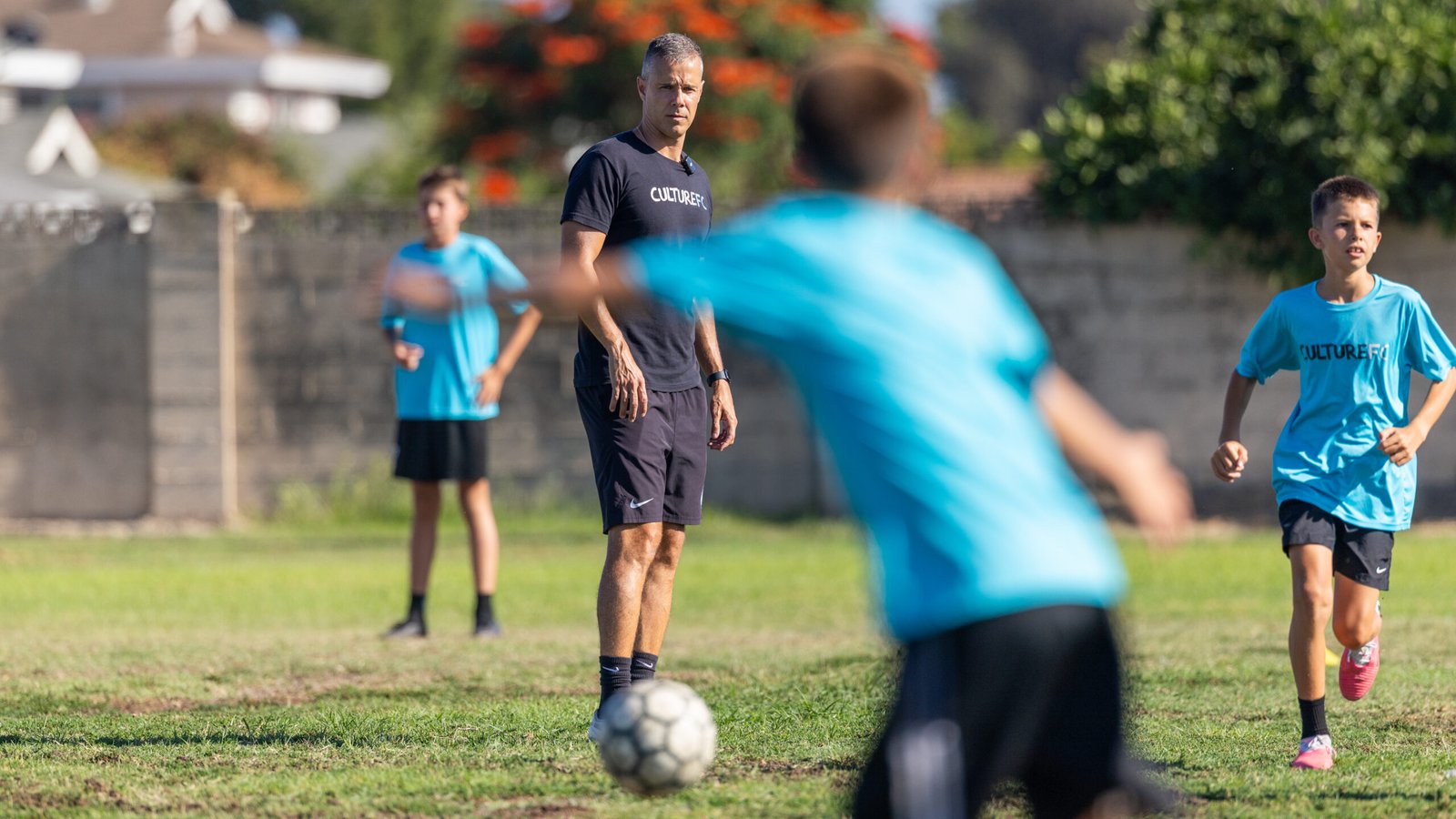
Raphael da Costa Alves did not set out to become a coach because the path looked glamorous. He started because something unfinished kept nagging at him.
He began coaching in the United States in early 2015 with a clear idea of how to develop players—and a mindset that was still heavily shaped by his own playing days. Coming from a country that “breathes” football, he quickly discovered that adjusting to a new environment required more than translating tactics. It required rethinking what development actually means.
“I was never happy with how I decided to stop my career early,” he says. “I was never able to distance myself from the game and had something bugging me all the time: ‘what if…’” Coaching became the medicine for those regrets and wounds. From the beginning it felt different—like being part of something larger than himself. He watched little kids turn into young men and found that the pathway forward was already clear in his mind. His methodology grew organically from that observation rather than from a rigid template.
Culture FC: A Community, Not a Brand
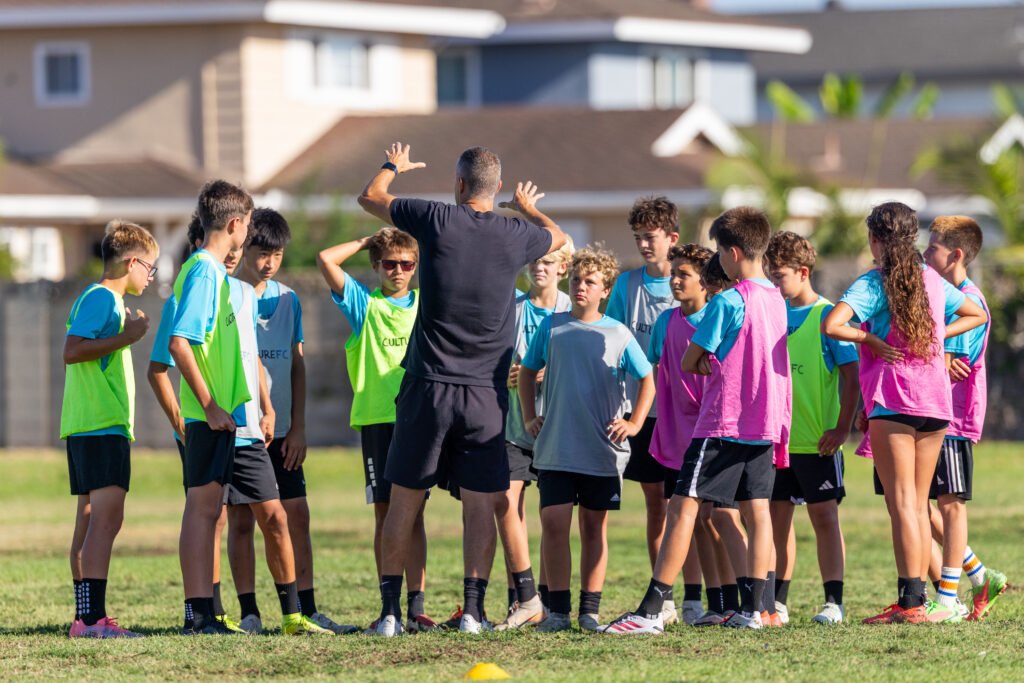
That organic approach sits at the center of Culture FC, the full development program and football community Alves leads. The club runs a school of football open to everyone, competitive teams, camps, charity and community events, internal tournaments, elite training, and professional pathways. Everything is integrated. Coaches know every player in the program. Different ages, genders, and parents interact regularly. Alves asks a pointed question: Is there any other place quite like that?
The results are starting to show. Ethan Kos, who joined at 13, is now with the Richmond Kickers. Alham signed with Santos last year and is being watched by another Brazilian club. Logan Kos and Jaycob Garcia—both in the program since they were six—are finalizing moves to the same club in Brazil. None of them were recruited through the usual “trend leagues.” Culture FC deliberately rejects that model. “We don’t believe in any of that,” Alves says. “After all, it does not exist in any other place in the world.”
Yet the club refuses to market itself as the top, elite, or best program in the country. Alves considers that language oversaturated and, in many cases, dishonest. He is confident Culture FC ranks among the stronger development environments, but he will not oversell it. “As much as parents want to hear that, it’s not for everyone.” The players who have moved on represent the rare 1 percent or less. For them, the real competition has only just begun—they will still need to crack another 1 percent or less to build lasting careers.
What Culture FC prefers to highlight is its coaching staff, a proven curriculum of methodology, and an environment where kids are respected and enjoy being on the field. Playing at the highest level is treated as the natural consequence of taking the right steps across every phase of development, not as a marketing claim.
Advice for the Next Generation
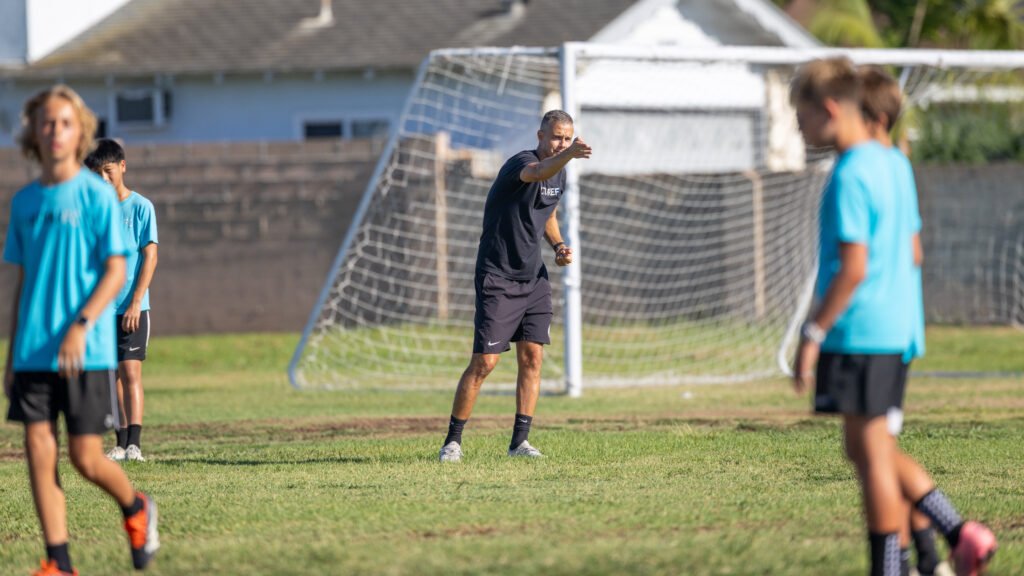
When young players ask how to become professionals, Alves does not sugarcoat the reality. The competition is global. Neighborhood leagues, county rankings, and the alphabet soup of American youth competitions are not the true measuring sticks.
“Eat, drink and breathe the game,” he tells them. “Play football everywhere, with and against everyone. Watch football as much as possible (not just highlights). Pay attention in the details and find many legends that you can observe. People might say you are obsessed with football. Believe me, few or none that are not will make it.”
Structure alone will not get anyone there. A thousand private sessions will not replace the street-level creativity of trying to nutmeg friends. No coach or mentor can do the work for a player. The dream has to be big enough to compete against the entire planet in the world’s biggest sport. The odds are low, but Alves rejects the idea that any dream is “too big.” Dream big, work hard, keep the ball close, and leave the rest to the football gods.
And if that journey happens to run through Culture FC? He allows himself a small smile: it might make life a little easier.
Raphael da Costa Alves turned personal regret into a living laboratory for player development. In an American youth soccer landscape often crowded with hype and short-term promises, Culture FC stands as a quieter, more deliberate alternative—one that prioritizes the long arc of growth, the health of a community, and the simple, demanding love of the game.
You can find more information on CultureFC and Coach Raphael at www.culturefc.com