In Formula 1, the first driver you have to beat is usually the one sitting on the other side of the garage.
Championship positions can tell us who is having the strongest season overall, but comparing drivers from different teams is never straightforward. Cars have different levels of performance, strengths and weaknesses, and a driver fighting for victories in one team may have opportunities that simply do not exist further down the grid.
A teammate, however, provides the closest thing Formula 1 has to a direct benchmark.
They have access to essentially the same machinery, work within the same organization and compete across the same calendar. That does not make every comparison perfectly equal — reliability, strategy, crashes, upgrades and plain bad luck can all have an impact — but it does make the battle between teammates one of the most interesting ways of assessing a season.
And when the 2026 grid is compared by points, some pairings are extraordinarily close. Others are anything but that.
The tightest battle on the grid can be found at Ferrari, where Lewis Hamilton has scored 241 points compared with Charles Leclerc’s 233. Put into percentage terms, Hamilton has accumulated only 3.4% more points than his teammate.
An eight-point difference this deep into a season is tiny, particularly when both drivers have accumulated more than 200 points. Rather than one Ferrari driver establishing a clear numerical advantage, the standings show just how closely matched the pair have been in terms of their final points return.
The next gaps are already considerably larger.
Nico Hülkenberg has scored 13 points compared with Gabriel Bortoleto’s 10, giving the German a 30% advantage over his teammate. Carlos Sainz, meanwhile, has seven points to Alex Albon’s five, meaning the Spaniard has scored 40% more.
Those percentages sound significant, although they also demonstrate why context matters when using this type of comparison. When the overall totals are relatively small, a difference of only a few points can produce a large percentage swing. Sainz, for example, is only two points ahead of Albon in absolute terms, despite holding a 40% advantage when expressed as a percentage.
Further up the standings, however, the gaps become much harder to dismiss.
Lando Norris has accumulated 211 points compared with Oscar Piastri’s 144. That puts Norris 67 points ahead and means he has scored 46.5% more points than his teammate.
For two drivers operating in the same team, that is already a considerable difference. Once both sides of a garage are regularly collecting substantial points totals, a gap of nearly 50% starts to show just how differently two seasons can develop despite access to the same fundamental package.
Then comes one of the most striking comparisons of the year.
Kimi Antonelli has 365 points, while George Russell has 242. That is a difference of 123 points, with Antonelli scoring 50.8% more than the Briton.
The size of that gap becomes even more notable because of the sheer number of points involved. Unlike some comparisons further down the grid, where a handful of points can dramatically inflate a percentage, Antonelli’s advantage is built from two very large totals.
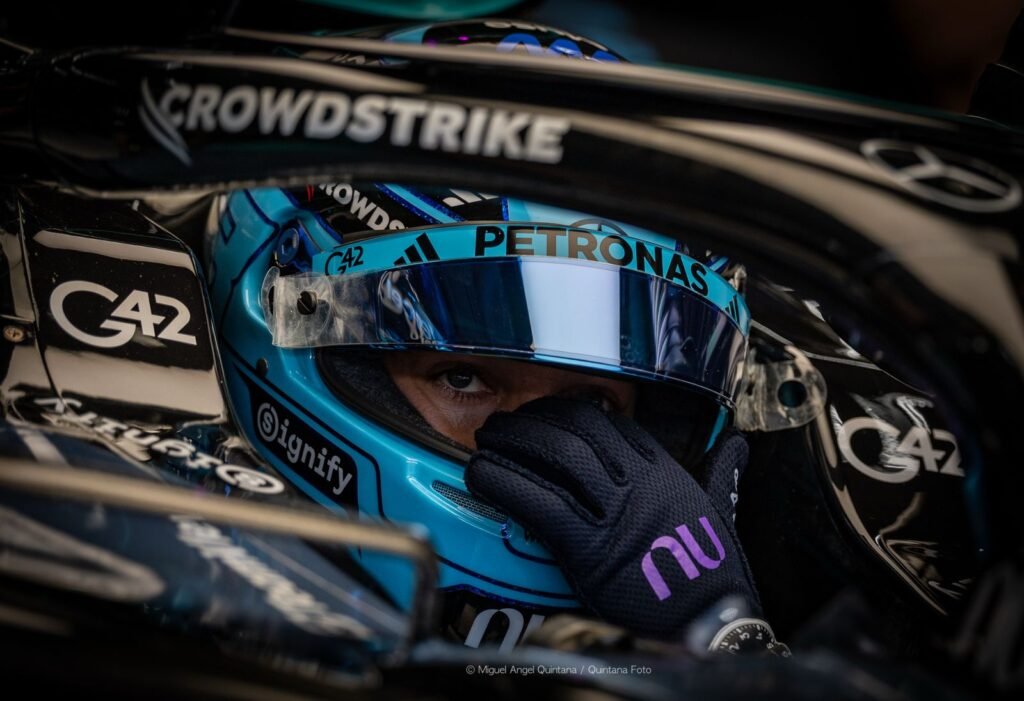
It is also particularly significant given where Antonelli is in his Formula 1 career. Beating an established teammate is one thing; building a triple-digit points advantage over one represents a very different level of statistical dominance. Let´s not forget, though, Russell has 3 DNF due to car malfunctions.
Pierre Gasly has also established a clear advantage at Alpine. His 42 points compared with Franco Colapinto’s 27 mean Gasly has scored 55.6% more points than his teammate.
But even that is nowhere near the largest gap on the grid.
Once the difference reaches 100%, the comparison becomes particularly easy to visualize: one driver has effectively scored more than twice as many points as the other. Such as in Aston Martin, Fernando Alonso has scored 7 spoints while Lance Stroll has been nowhere near that delivering 0 points to the Silverstone outfit in the whole season.
Liam Lawson is the first driver to cross that threshold. His 77 points stand against Arvid Lindblad’s 38, giving Lawson a 102.6% advantage. Put simply, Lawson has scored slightly more than double his teammate’s total.
Max Verstappen takes that disparity even further.
The Dutchman has accumulated 236 points compared with Isack Hadjar’s 105. That is a 131-point difference and means Verstappen has scored 124.8% more points than his teammate.
Verstappen’s advantage is particularly striking because Hadjar’s 105 points are far from an insignificant total. This is not a case of comparing a major points haul against a driver who has barely troubled the top 10. Hadjar has broken into triple figures, yet Verstappen has still accumulated well over twice as many points.
There is, however, one pairing with an even more extreme percentage difference.
Ollie Bearman has scored 23 points this season. Esteban Ocon has 7.
Bearman therefore has 228.6% more points than his teammate, the largest calculable percentage advantage on the grid. Another way of expressing the same difference makes it even clearer: Bearman has scored more than three times Ocon’s total. Some might not wonder why the French man does not have a seat for next season.

It is a remarkable statistical gap, although once again the relatively low totals compared with the championship leaders are worth remembering. Bearman’s advantage over Ocon is 16 points in absolute terms — nowhere near Antonelli’s 123-point advantage over Russell or Verstappen’s 131-point margin over Hadjar. Percentage and raw points therefore tell slightly different stories.
There are also two cases where percentages stop being useful altogether.
Valtteri Bottas and Sergio Pérez are tied at zero points, so neither driver holds an advantage over the other.
Percentage differences provide an interesting way of visualizing the gaps between teammates, but they should never be treated as a definitive ranking of driver performance.
Points do not record every mechanical failure. They do not explain whether one driver was taken out by another car, lost a result because of strategy or happened to suffer reliability problems while running in a strong position. They also do not account for how upgrades may have been distributed between cars during a season.
Nor does scoring 100% more points automatically mean a driver has performed “twice as well” as their teammate. Formula 1 performance cannot be reduced to a single equation.
What the comparison does show is how effectively each driver has converted their season into championship points relative to the person with the most comparable equipment.
And from that perspective, the 2026 grid presents an enormous range.
Hamilton and Leclerc are separated by only 3.4%, making Ferrari’s battle remarkably balanced. Hülkenberg and Sainz hold relatively modest absolute advantages that become more dramatic when expressed as percentages. Norris, Antonelli and Gasly have established much clearer gaps, while Lawson and Verstappen have both scored more than twice as many points as their respective teammates.
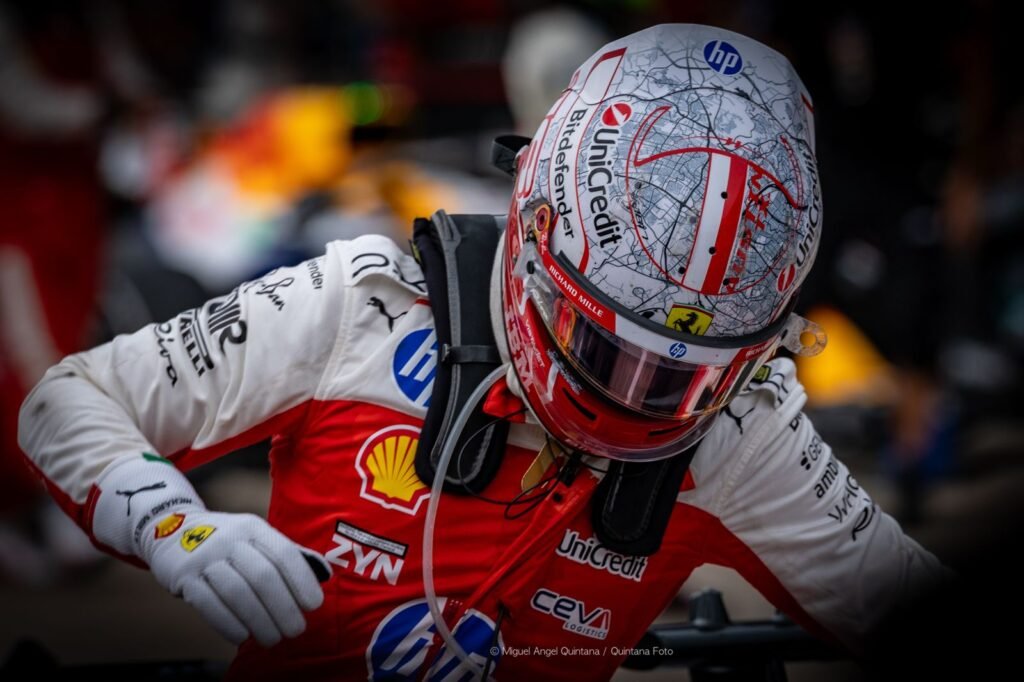
Then there is Bearman, whose 23 points against Ocon’s seven produce the biggest percentage difference of them all: 228.6%.
There are many ways to measure a Formula 1 driver’s season. Wins matter. Podiums matter. Qualifying matters. Race pace matters. Context always matters.
The machinery may not always be identical, circumstances can differ dramatically and points don´t always tell the whole story. But over the course of a season, the championship standings can still reveal just how differently two drivers within the same team have converted their opportunities into results.
Heading into the Mexico City Grand Prix, the 19th round of the season, some of those battles are remarkably close and others are not.